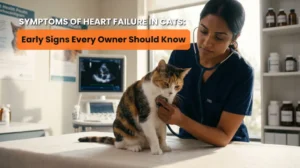
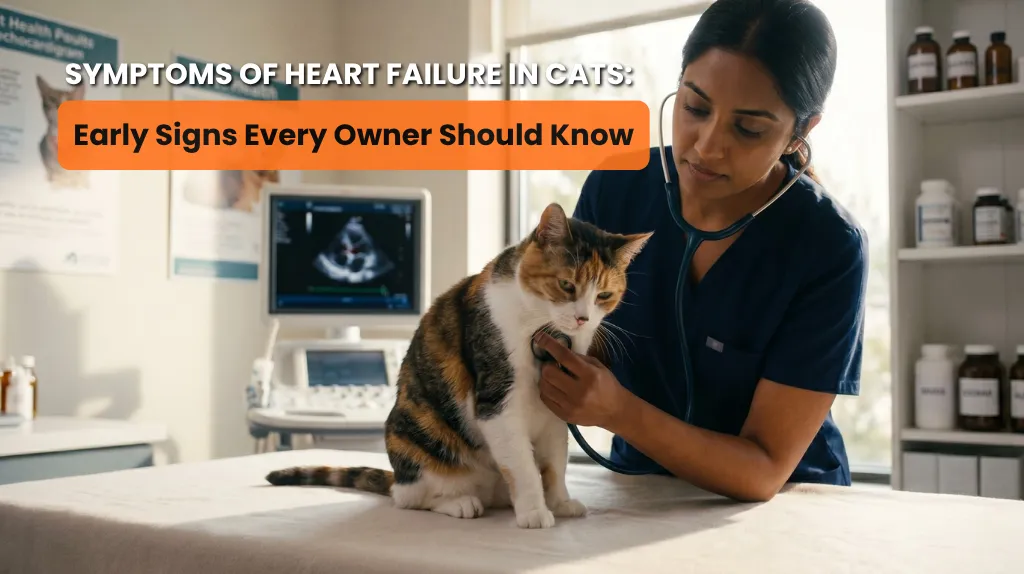
Heart failure in cats, or congestive heart failure (CHF), is a serious chronic condition that develops gradually. Many pet owners may not notice the early signs until the condition becomes serious. One of the most common underlying heart diseases in cats is hypertrophic cardiomyopathy (HCM), which can lead to heart failure, characterized by rapid breathing, loss of appetite and changes in behaviour. Understanding the symptoms of heart failure in cats can help you act early to improve your cat’s life and extend their lifespan.
In this guide, you’ll learn the early signs, advanced symptoms, causes, and when to seek veterinary care.
What is Heart Failure in Cats?
Heart failure does not mean that a cat’s heart stops working. It means the heart is not working properly, and the cat’s heart cannot pump blood effectively, which leads to poor oxygen circulation and fluid buildup in the lungs or chest.
Heart disease causes two main problems:
- The cat’s heart cannot pump blood effectively due to poor circulation
- Fluid leaks into the lungs or chest (causing breathing issues)
Causes of Heart Failure in Cats
Heart failure is usually the result of underlying heart disease.
Common Causes:
- Hypertrophic cardiomyopathy (HCM)
- High blood pressure (hypertension)
- Hyperthyroidism
- Congenital heart defects (present at birth)
Among these, hypertrophic cardiomyopathy is the main cause in cats.
Types of Heart Failure in Cats
Congestive Heart Failure (CHF)
The most common type:
The left side of the heart normally sends oxygenated blood to the body. When it fails, fluid backs up into the lungs.
There are two types of congestive heart failure:
1. Left-sided CHF in cats
It occurs when the left side of the heart can’t pump oxygenated blood efficiently into the body. As a result:
- Affects blood flow from the lungs to the body
- Leads to fluid in the lungs
- Respiratory symptoms such as rapid or labored breathing
2. Right-sided CHF in cats
Cats with right-sided CHF may show swelling in the belly (ascites), retention of fluid, or swollen legs. This happens when the heart’s right side struggles to pump blood returning from the body. As a result:
- Affects blood returning to the heart
- Causes fluid buildup in the abdomen or chest
Early Signs of Heart Failure in Cats
The early signs of heart failure in cats can be subtle and easy to miss. Because cats often hide illness, even small changes in breathing, appetite, or behavior can be important.
1. Reduced activity and lethargy
If your cat seems less playful, sleeps more than usual, or tires easily, it may be an early warning sign.
2. Mild breathing changes
Watch for:
- Slightly faster breathing
- Shallow breathing
- Breathing more noticeably while resting
A normal resting breathing rate is usually around 16 to 30 breaths per minute. A consistently higher rate may be a sign that something is wrong.
3. Loss of appetite
Cats with early heart problems may eat less or seem less interested in food, which can lead to gradual weight loss.
4. Behavioral changes
Your cat may:
- Avoid jumping, climbing, or playing
- Become quieter or less social
- Seem restless or uncomfortable
These changes may be subtle, but they can be early clues that your cat needs veterinary attention.
Common Symptoms of Heart Failure in Cats
As the condition progresses, symptoms become more noticeable and serious.
1. Difficulty Breathing (Most Common Symptom)
- Rapid breathing
- Open-mouth breathing (emergency)
- Labored or heavy breaths
This happens due to fluid buildup in or around the lungs.
2. Extreme Lethargy and Weakness
Your cat may struggle to move, play, or even stand for long periods.
3. Weight Loss and Poor Condition
Chronic illness leads to muscle loss and visible weakness.
4. Pale or Bluish Gums
This indicates poor oxygen circulation and requires immediate attention.
5. Fainting
Sudden fainting episodes are a severe warning sign and should never be ignored.
Advanced Symptoms (Late-Stage Heart Failure)
In advanced stages, symptoms become life-threatening.
Fluid Build-Up
- In the lungs (pulmonary edema)
- Around the lungs (pleural effusion)
- Causes severe breathing distress.
Hind Leg Paralysis (Blood Clots)
A dangerous complication where a clot blocks blood flow to the back legs. Signs include:
- Sudden paralysis
- Severe pain
- Cold hind legs
This is a medical emergency.
When Should You See a Vet
You should seek veterinary care immediately if you notice:
- Rapid or labored breathing
- Open-mouth breathing
- Sudden weakness or collapse
- Loss of appetite for more than 24 hours
- Paralysis in the hind legs
Early diagnosis can significantly improve your cat’s life and lead to better treatment.
Diagnosis of Heart Failure in Cats
Veterinarians use different methods to confirm the condition:
Physical examination
Veterinarians examine for abnormal heart rates and lung sounds,while also checking for cold hindlimbs or weak pulses.
Echocardiogram (Ultrasound):
The most accurate tool to measure heart muscle thickness, chamber size, and function to confirm conditions like hypertrophic cardiomyopathy (HCM).
Thoracic Radiographs (X-ray):
Used to identify fluid buildup in or around the lungs and to examine heart size.
NT-proBNP Blood Test
A biomarker test that helps differentiate between respiratory and heart issues, elevated levels strongly suggest significant heart disease. These tests help to determine the serious causes of heart failure and provide better treatment.
Treatment Options for Heart Failure in Cats
While heart failure cannot always be cured, it can be managed effectively.
Medications
- Emergency Procedures often involve oxygen therapy and, if necessary, thoracentesis (a procedure to drain fluid from the chest).
- Diuretics to remove excess fluid
- Heart medications to improve function
Lifestyle Changes
- Reduce stress
- Provide a calm environment
- Monitor breathing regularly
Ongoing Care
Regular vet visits and medication adjustments are essential for long-term management.
How to Monitor Your Cat at Home?
Daily checks can help you recognize the early signs:
- Count breathing rate while resting
- Monitor eating habits
- Watch for behavior changes
Consistency is key.
Conclusion
The symptoms of heart failure in cats start silently but can progress quickly if ignored. Early signs such as breathing problems, loss of appetite and behaviour changes are easy to recognize.
By staying observant and seeking veterinary care at the first warning signs, you can help your cat live a longer, more comfortable life.
FAQs About Symptoms of Heart Failure in Cats
1. What are the first symptoms of heart failure in cats?
Most common early signs include:
- Behaviour changes,
- reduced activity,
- mild breathing changes and
- loss of appetite.
2. How do I know if my cat is dying from heart failure?
Signs of late-stage heart failure include breathing problems, fluid buildup, collapse, blue gums, and paralysis in the hind legs. Immediate veterinary care is critical.
3. Do cats with heart failure cough a lot?
Cats rarely cough. Instead, they show breathing difficulties, rapid breathing, or open-mouth breathing as key symptoms.
4. How long can a cat live with heart failure?
With early diagnosis and consistent medication, many cats can live one to three years or more
5. Is heart failure in cats painful?
Heart failure can cause significant distress. Fluid buildup makes breathing very difficult, and complications like blood clots can cause severe pain. Your vet can recommend ways to keep your cat comfortable.
6. When should I take my cat to the vet?
If your cat shows signs like rapid breathing, lethargy, loss of appetite, or fainting, seek veterinary care immediately.