Thyroid problems in cats are known as hyperthyroidism. Feline thyroid disease is one of the most common hormonal disorders affecting cats, especially older cats. Many pet owners will be unaware of early signs because they go under normal changes. However, recognizing the symptoms of thyroid in cats is very significant for the best treatment of your pet and your pet’s quality of life. In this topic, you will learn the symptoms of thyroid problems, how to identify, diagnose and treat feline disease effectively.
What is Feline Thyroid Disease?
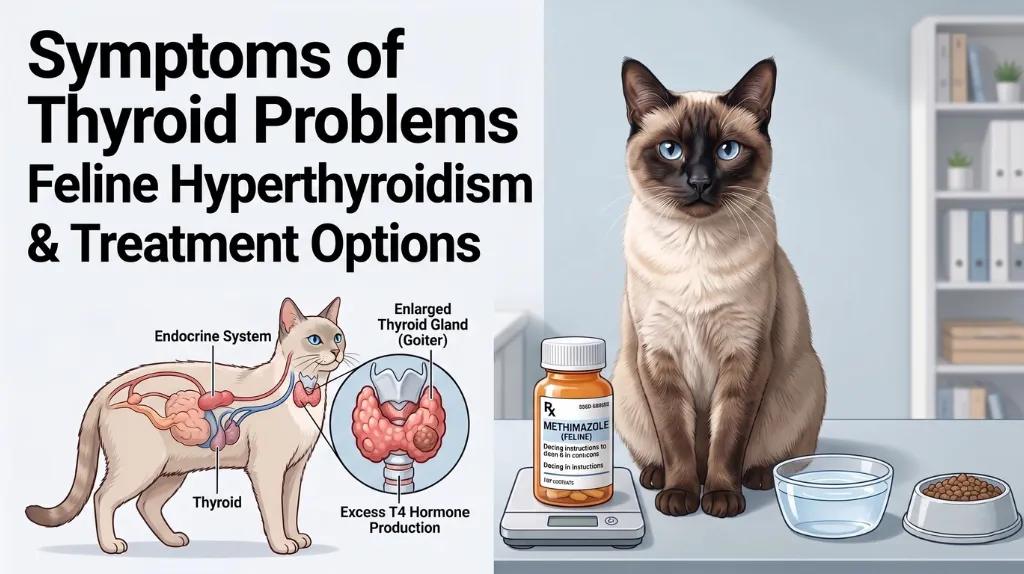
Feline thyroid disease, known as hyperthyroidism, is an endocrine disorder in old age cats caused by a benign tumor on the thyroid gland that produces more thyroid hormones. This overproduction increases the cat’s metabolism, leading to weight loss, increased appetite, vomiting, diarrhea, increased thirst and urination and also an imbalance in every organ of the cat’s body.
Common Symptoms of Thyroid Problems in Cats
The most common symptoms of thyroid problems in cats are the following:
1. Weight Loss Despite Increased Appetite
If you notice your cat eats more than usual, despite its rapid weight loss. These symptoms tend to give more attention to your pet instead of the normal routine, and finally, you need to go to the vet immediately.
2. Increased Thirst and Urination
Frequent use of water beyond the normal routine and urination are signs of early metabolic changes and hormone imbalance.
3. Hyperactivity and Restlessness
Your cat may feel anxious, less energetic and unable to settle, especially at night.
4. Rapid Heartbeat
A rapid heartbeat is a serious symptom that requires more attention and needs to be seen by a vet immediately.
5. Vomiting and Diarrhea
Thyroid problems may cause digestive issues like vomiting and diarrhea.
7. Behaviour Changes
Your cat shows abnormal behaviour such as aggression, especially at night. Increased aggression or irritability may occur.
How to Spot Thyroid Disease Early?
Early signs of detection can prevent further complications. Early signs are as follows:
- Weight changes
- Increased appetite
- Abnormal behaviour
- Heart Problems
- Thirst and urination
- Digestive Problems
- Restlessness and low energy level
What are the serious symptoms of feline thyroid disease?
- High blood pressure
- Heart problems (Cardiovascular disease)
- Kidney problems
If we notice hyperthyroidism in time and see our vet immediately, we can protect our cat from these serious problems through proper treatment.
How is Feline Thyroid Disease Diagnosed?
1. Physical Examination
A vet may feel an enlarged thyroid in the neck, which is known as a goiter. This is the main symptom of hyperthyroidism in cats.
2. Blood Tests
The most common diagnostic method measures thyroid hormone (T4) levels. T4 thyroxine, which is called the thyroid test, measures the primary hormone production in the thyroid gland. This test also helps to recognize hypo and hyperthyroidism. It also helps the vet to determine the function of the thyroid gland.
3. Additional Tests
- Urine analysis
Best Treatment Options for Feline Thyroid Disease
1. Medication
Daily medication, anti-thyroid drugs such as methimazole, are used to control hormone production. Pros: Affordable and effective
Cons: Requires lifelong administration
2. Radioactive Iodine Therapy
A vet almost recommends radioiodine treatment to treat hyperthyroidism permanently. It is a highly effective and often permanent cure.
Pros: High success rate
Cons: Expensive and requires specialized facilities
3. Surgery (Thyroidectomy)
Surgical treatment is used to remove an enlarged thyroid gland.
Pros: Potential permanent solution
Cons: It may increase risk and complications.
4. Special Diet
Prescribed special iodine-restricted diets may be helpful to control the production of iodide hormones.
Home Care Tips for Cats with Thyroid Problems
- Use a prescribed balanced diet recommended by a vet
- Always provide fresh water to your cat
- Check weight regularly and notice behaviour regularly
- Administer medication consistently
Complications if Left Untreated
Untreated thyroid disease can lead to:
- Heart Problems
- High blood pressure
- Kidney problems
Early treatment prevents these serious issues.
Preventing Thyroid Problems in Cats
While not always preventable, you can reduce risks by:
- Regularly visit your vet
- Provide high-quality food
- Notice a change in behaviour and weight regularly
Conclusion
To understand , the symptoms of thyroid problems in cats is essential for every pet owner, especially middle-aged and older pets. Early diagnosis and proper treatment can significantly improve your cat’s health and lifespan. If you notice unusual changes in your cat’s behavior, appetite, or weight, consult a veterinarian immediately.
A proactive approach ensures your feline companion stays healthy, active, and happy.
FAQs
1. What are the first signs of thyroid problems in cats?
The early signs of thyroid problems are;
- Weight loss
- Increased appetite
- Hyperactivity and restlessness
2. Can thyroid disease in cats be cured?
Yes, it can be cured by radioiodine treatment, by proper medication and by surgery.
3. How long can a cat live with thyroid disease?
With proper treatment, cats can live many healthy years.
4. Is feline thyroid disease common?
Yes, it is very common in middle-aged and older cats, especially those over 7–10 years.
5. What happens if hyperthyroidism is left untreated?
This problem can lead to serious complications such as heart problems, kidney problems and high blood pressure, etc.
6. Are there natural treatments for feline thyroid disease?
Iodine-restricted food and proper care may help, but proper treatment by a vet is necessary.