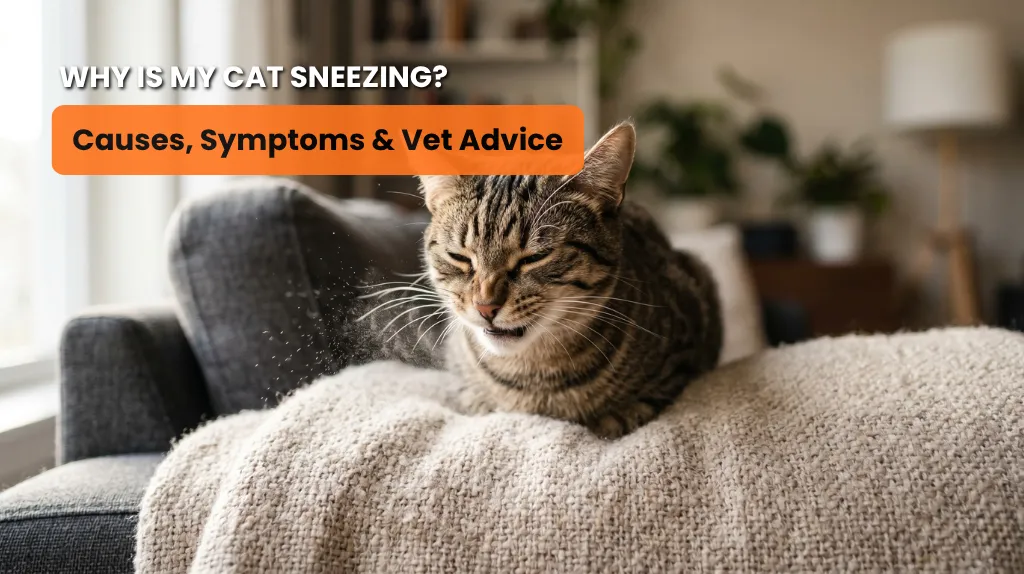
You are not alone if you have been wondering why cats sneeze. Cat sneezing is a leading reason for visiting the vet as a pet owner.Usually, a cat sneezing is not a serious issue.Knowing the difference between a harmless sneeze and a serious one can positively influence your cat’s overall health.
Your cat’s sneezing can be attributed to everything from irritating particles to constant sneezing. To stay proactive about your cat’s health, this guide covers everything you need to know.
What Causes Feline Sneezing?
Well, a cat sneezes for the same reason a human sneezes. Dust, debris, or mucus are particles that provoke sneezing. One or two sneezes per day are normal and harmless. However, a cat that sneezes continuously, fits of sneezing, and/or suffers a sneezy-related phenomenon warrants greater concern.
There are many underlying causes of sneezing in cats, including the following:
1. Things like Dust that Tickles Your Cat’s Nose
If something tickles the inside of your cat’s nose, it will cause sneezing. Many things in your house could irritate your cat’s nose. Dust, cigarette smoke, candles, perfumes, cleaning products, and dust from the cat litter are all possible irritants.
Consider cleaning your cat litter with unscented cleaning products and litter.
2. Cat Flu
Upper Respiratory Infections, or URIs, are the primary cause of sneezing. A URI is equivalent to the human cold or flu, and they are almost exclusively viral and bacterial infections.Most URIs are caused by feline herpesvirus or feline calicivirus. Bacteria such as Bordetella and Chlamydia can also be responsible.
Some signs of a URI are:
- Sneezing tends to go on for an extended period of time.
- Clear, yellow, green, or bloody nasal or ocular discharge
- A harsh, repeated cough and highly increased swallowing.
- Fatigue and fever are also signs of URI, along with a loss of appetite and dehydration.
URIs typically resolve on their own in three weeks. If your cat is young and hasn’t had their vaccines, they are more at risk of contracting URIs.
3. Viral Infections — Feline Herpesvirus and Calicivirus
Cat sneezes are often caused by two viruses: feline herpesvirus and feline calicivirus. Feline herpesvirus remains inactive, eventually resurfacing when your cat is unhealthy or stressed. After recovering, your cat may start to sneeze weeks later. Feline herpesvirus is incurable; however, your veterinarian may recommend antiviral medicine and supplements to control the virus.
4. Bacterial Infections
Bacterial infections often occur after or along with viral infections. Commonly known sneezing bacteria infections include Bordetella, Mycoplasma, and Chlamydia.Green or yellow nasal discharge in cats is usually a sign of bacterial infection. The good news is that bacterial infections respond well to antibiotic treatment, and most cats improve quickly once antibiotics are started.
5. Allergies
Not many people know that cats can have allergies too. While most allergies in cats are often presented as dermatitis caused by itching or hair loss, in some cases, lesions may also be present. In some cases, cats may form allergic rhinitis, which is presented by sneezing,runny nose, and possibly coughing in felines with asthma.
These allergies can either be seasonal or year-round, caused by the presence of pollen, dust, and bacteriologic mold.
6. Dental Disease
Many cat owners will be surprised by this. There is not much distance between the nasal passages and the roots of your cat’s upper teeth. An upper tooth infection or root inflammation will eventually break down the barrier between the tooth root and the nasal passage.
With the barrier broken down, food debris and bacteria will enter the nose and cause sneezing. If a cat has an upper tooth infection, an owner may notice the cat sneezing, bad breath, and perhaps facial swelling.
7. Something Caught in the Nose
If your cat is suddenly sneezing a lot, there may be a grass blade or a small piece of lint, etc., that can get caught in the nose. If this happens, you can rest assured that this foreign body will be sneezed out quickly. In the case of something larger, you will need to take your cat to the vet so that it can be safely removed.
8. Inflammation of the Nose and Sinuses
Rhinitis is an inflammation of the nasal mucosa. Sinusitis is inflammation of the sinuses. These two commonly occurring diseases in cats simultaneously after a cat has a respiratory infection. If your cat finds it difficult to breathe, begins to paw at the face, has nasal discharge, and has nasal sneezing, it is likely to be suffering from this condition. It can usually be treated by the veterinarian removing the nasal discharge, and then administering an anti-inflammatory and antifungal treatment to open the nasal passages.
9. Tumors and Growths
Growths and tumors in the nasal passages of older cats may result in chronic sneezing and nasal discharges that may be bloody. These growths may be evaluated using rhinoscopy. Nasal biopsies may be taken. These cases need urgent veterinary attention. If your senior kitty starts sneezing on a daily basis and suffers from bloody nose bleeds and/or one-sided nasal discharges, please get in touch with your vet.
10. Vaccines
Some intranasal vaccines may initiate mildly sneezing symptoms that may be temporary. These vaccines may be significant in the prevention of upper respiratory infections.
Recognizing Cats’ Sneezing Patterns
Paying attention to your cat’s sneezing pattern can help your vet find the cause faster. Ask yourself these two simple questions:
1. Is there a specific time of the day that the sneezing occurs?
Notice when your cat sneezes most. For example:
- Sneezing in the morning may be linked to dust or allergens in your cat’s sleeping area
- Sneezing after using the litter box may indicate the litter is irritating the nose
- Sneezing after you clean the house may point to cleaning product fumes or sprays
- Sneezing during certain seasons may suggest a pollen or mold allergy
2. When did the sneezing start gradually or suddenly?
This tells a lot about the cause:
- Sudden sneezing usually points to a foreign object stuck in the nose, a new irritant in the environment, or a recent infection
- Gradual sneezing that gets worse over time may suggest a developing infection, dental disease, nasal inflammation, or in older cats, a nasal growth or tumor.
What You Should Do
Keep a simple record of when and how often your cat sneezes. If possible, record a short video on your phone. This helps your vet clearly identify whether your cat is sneezing, coughing, gagging, or reverse sneezing, as these can look very similar but have different causes.
When Is Cat Sneezing a Problem?
While cat sneezing is usually harmless, there are some cases where you should contact your vet. If your cat sneezes and has had sneezing for:
- Over two days
- Nasal/eye discharge that is yellow/green/bloody
- Disinterest in food
- Sudden and extreme weight loss
- Extreme sickness
- Swollen or pus-filled eyes
- Fever or swelling
- Breathing problems
- Diarrhea along with sneezing
Cats need food regularly to keep their bodies from going into starvation mode. After just two or three days, a cat’s condition worsens, and they can develop fatty liver disease. If your cat won’t eat, go to the vet.
Kitten sneezes always warrant a vet visit, because a budding immune system can’t cope and respond to an infection like an adult immune system can.
What Happens in a Sneezing Cat Vet Visit?
A vet uses several tools when diagnosing a sneezing cat, because sneezing and other conditions have overlapping symptoms.
1. Inspection
A vet conducts a straight-up inspection. This includes checking the mouth for tooth infections,discharge, eye problems, inflammation and fever.
2. Imaging
X-rays and CT scans can show damage to the interior structures of the nose or other abnormalities within the chest. Sneezing cats can be imaged with CT scans. This is typically a gold standard; however, a referral to a special hospital is typically required.
3. Rhinoscopy
Under general anesthesia, a veterinarian can insert a small diagnostic camera within the nasal cavities or passages of the cat. This allows them to check for the presence of nasal tumors or to check for the presence of fungal plaques or other foreign objects.
4. Nasal Lavage and Biopsy
In nasal lavage, the nasal cavities are flushed with sterile liquid. This is performed under anaesthesia and facilitates the dislodging of a foreign object, and allows for the collection of a foreign object, and the collection of a sample for the purpose of further testing. Moreover, a nasal tissue biopsy removes a sample of the nasal cavity. It can also confirm if the causative agent of the obstruction is an inflammatory agent or a fungal agent.
5. Blood Work and Urinalysis
Blood and urine tests can screen for conditions, pathogens, and infections that may be difficult to identify on examination.
How Do Vets Treat a Sneezing Cat?
The treatment would be dependent on the cause of the sneezing. The primary objective would be to bring about relief from the symptoms and reduce the frequency of sneezing.
1. Antibiotics:
If the causative agent of the condition is of a bacterial nature, antibiotics often help and tend to produce a significant impact.
2. Antiviral medication:
These are used for the management of viral infections that can be caused by the herpes virus.
3. Steroids and Non-steroidal anti-inflammatory drugs:
These are often employed in the management of nasal swelling and obstruction.
4.Nasal and eye drops or medications
These can be used to affect the symptoms causatively.
Nasal lavage, performed under anesthesia:
Though this is a temporary intervention, in some cases where there may be probable foreign objects, it often helps to provide relief.
5. Intravenous nutrients and fluids:
In severe cases, a cat may need to be hospitalized and given IV fluids and nutrition, especially if it has not eaten or drunk water for an extended period and to keep it alive. This typically occurs in cases where a cat has not taken sustenance (that is, solid or liquid) for an extended period of time.
6. Surgery:
Could be considered for tumors or severe structural abnormalities in the nose.
What Can You Do at Home for a Sneezing Cat?
If your cat has a minor sneezing situation or if you have yet to book a vet appointment, you can do these things to comfort your cat:
- Using a slightly warm cloth helps to clean your cat’s face and nose of any soiled discharge.
- Get a humidifier to help keep the nasal passages moist.
- Warm up your cat’s food to enhance its smell and encourage eating.
- Be sure to always have fresh water out for them to drink.
- Change to low-dust, unscented cat litter.
- Stay away from strong scents and cleaning products around your cat.
- Keep your home as clean with as much order and as orderly as possible with as little dust as possible.
- Try to help soothe your cat as much as possible, as stress can trigger and worsen your cat’s herpesvirus.
- Keeping Sneezing in Cats to a Minimum
There is always an added benefit in keeping treatment to a minimum, and with this in mind, and without the sneezing, here are some of the best ways to approach keeping your cat healthy:
Make sure to get regular updates to remain in tip-top shape: The FVRCP vaccine helps protect against feline herpesvirus and other common causes of sneezing. Do stick to your vet’s recommendations.
-
- You should begin an annual routine for dental check-ups for your cat: Sneezing is normally the first reminder that a cat should have a dental check-up. Regular care will keep root infections at bay, which could lead to nasal passage problems for your cat.
- Keep the airborne irritants to a minimum:
Keep your cleaning products as far away from your pets as possible for the best ventilation of your home, and to take care of the ventilation.
- Minimizing stress is important for your cat’s health and controlling the herpes virus flare-ups. You can improve your cat’s health by providing a safe space, a consistent routine, and enrichment.
- When introducing a new cat to your home, keep them separated from existing cats for at least 2 weeks to prevent the spread of infection.
Conclusion: The Vet is the Best Option
Most of the time, a cat’s sneezing is benign. However, there are exceptions when sneezing can be concerning. Cat owners know their furry friends better than anyone else, and they are in the best position to spot anything concerning. Cat owners should always consult their vet when these situations arise.
Keeping your cat healthy can be achieved through scheduling regular vet visits, administering all necessary vaccinations, and creating a safe space at home. Many conditions that result in sneezing can be easily managed when treated early. Cat owners should be proactive when this appears to be a concerning issue.
Use this medically oriented advice at your own risk. Always consult a veterinarian.
FAQ’s
Why is my cat sneezing so much?
The most common reasons are upper respiratory infections, dust, smoke, perfume, or something stuck in the nose. If your cat has been sneezing for more than 48 hours or shows other symptoms like discharge or loss of appetite, visit your vet.
When should I take my sneezing cat to the vet?
Take your cat to the vet if you notice:
- Sneezing lasting more than 2 days
- Yellow, green, or bloody discharge from the nose or eyes
- Loss of appetite or sudden weight loss
- Difficulty breathing
- Fever or facial swelling
Is it normal for cats to sneeze every day?
One or two sneezes a day is completely normal. However, if your cat is having repeated sneezing fits daily along with other symptoms like discharge or lethargy, it is time to contact your vet.
Can cat sneezing spread to humans?
No. Cat viruses like feline herpesvirus and calicivirus cannot transfer to humans. However, washing your hands after your cat sneezes on you is still a good hygiene habit.
What does it mean when my cat sneezes blood?
Blood in a sneeze is a serious warning sign. It can indicate a nasal foreign body, a polyp, a tumor, or severe nasal irritation. Do not wait — contact your vet immediately.
Can allergies cause my cat to sneeze?
Yes, but it is not the most common cause. Cats can be allergic to pollen, dust, and mold, which may cause sneezing, runny nose, and coughing. Cats with asthma are more likely to show allergy-related sneezing.
Can dental problems cause my cat to sneeze?
Yes. Infected upper teeth sit very close to the nasal passages. When a tooth root gets infected, bacteria can enter the nose and cause persistent sneezing, bad breath, and one-sided nasal discharge. Annual dental checkups can prevent this.
How long do cat colds usually last?
Most upper respiratory infections in cats clear up within 1 to 3 weeks. If your cat is still sick after 3 weeks or gets worse, visit your vet for proper treatment.
What can I do at home to help my sneezing cat?
You can:
- Wipe the nose gently with a warm damp cloth
- Use a humidifier to keep the air moist
- Switch to unscented, low-dust cat litter
- Warm up their food to encourage eating
- Keep strong scents and cleaning sprays away from your cat
What is reverse sneezing in cats?
Reverse sneezing is when a cat rapidly sucks air in through the nose instead of pushing it out. It makes a loud snorting sound and can look alarming but is usually harmless. If it happens frequently, record a video and show it to your vet to rule out any underlying issue.